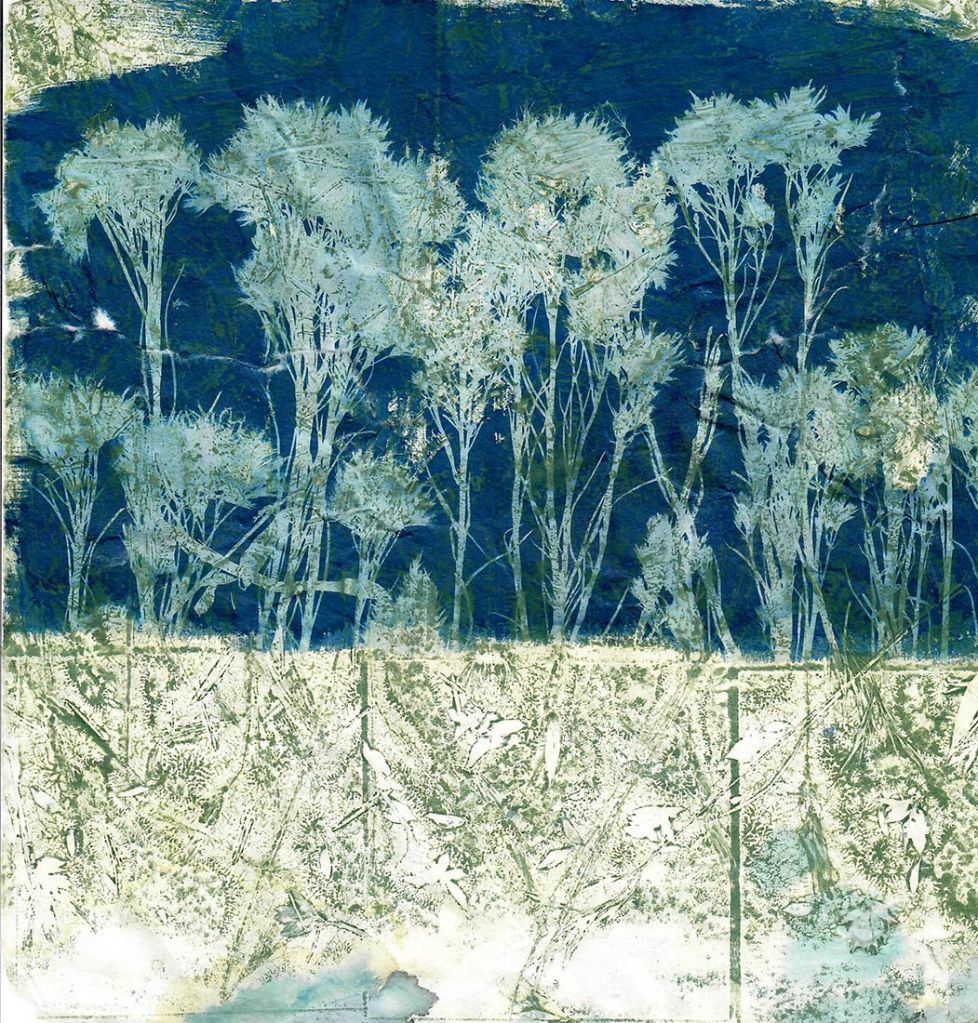
Mixed media eco-print: Cyanotype of chamisa over ghost monoprint using soy based ink of fieldplants, printed 2022 at Green Olive Arts, Tetouan, Morocco
We received a mentorship from Creature Conserve to activate the TAOS Distillery as a space to ignite discourse around ecological relationships in Steppe zones, with a focus on water sharing. Our first artist in residence was Daniela Jules Garza, who arrived from Switzerland to create eco-prints and help set intentions for the use of the space. It is such a blessing to continue learning creative processes from Daniela. We spent a month together at AADK in Blanca, Spain in 2023, tracing the flow of Acequia. It was her guidance that opened ways I’ve started integrating cyanotype into drawings. These multi-media works on paper were created using prints from Green Olive Arts in Tetouan, Morocco & drawings started at AADK in Blanca, Spain. Layering cyanotype projections of plants gathered around the Distillery ties the geographies with a nod to how the human practice of water sharing has the capacity to benefit ecologies through dry lands.

Cyanotype of Penstemon strictus seedheads with scattered seeds atop Anthotype of indigenous herbs from the Zarka (Blue) watershed in the Rif Mountains of northeastern Morocco.
Anthotypes created at Green Olive Arts in 2022

Cyanotype of swamp milkweed seedheads over mixed media drawing of a red throated hummingbird.
This summer, hummingbirds ruled the roost around the Distillery Gardens.

Cyanotype over Anthotype created at Green Olive Arts, Tetouan Morocco
In the process of restoring the gardens to grow a diverse assortment of native plants, I weeded out a pile of thistle that Daniela turned into a nourishing tea.
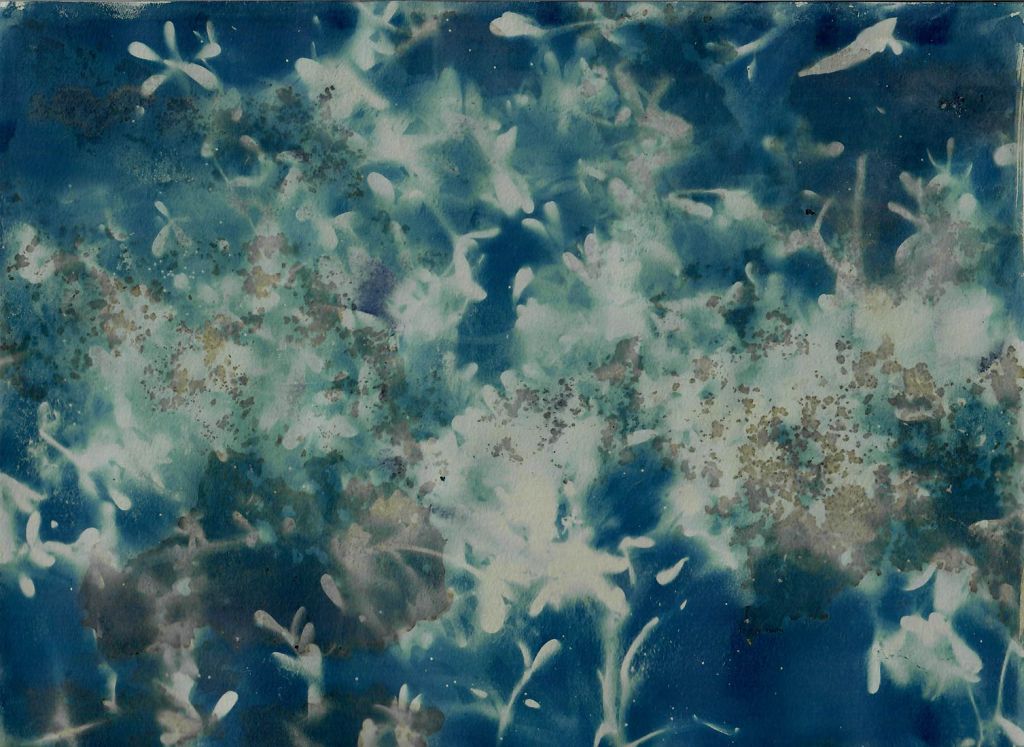
Cyanotype over tea stained ecoprint created in 2023 at AADK in Spain
Considered a weed by many in the west, purslane is actually an important crop, ground cover and weed suppressant in Morocco. It is grown as a nourishing vegetable around corn in the Acequia-fed fields in the Zarka Valley.
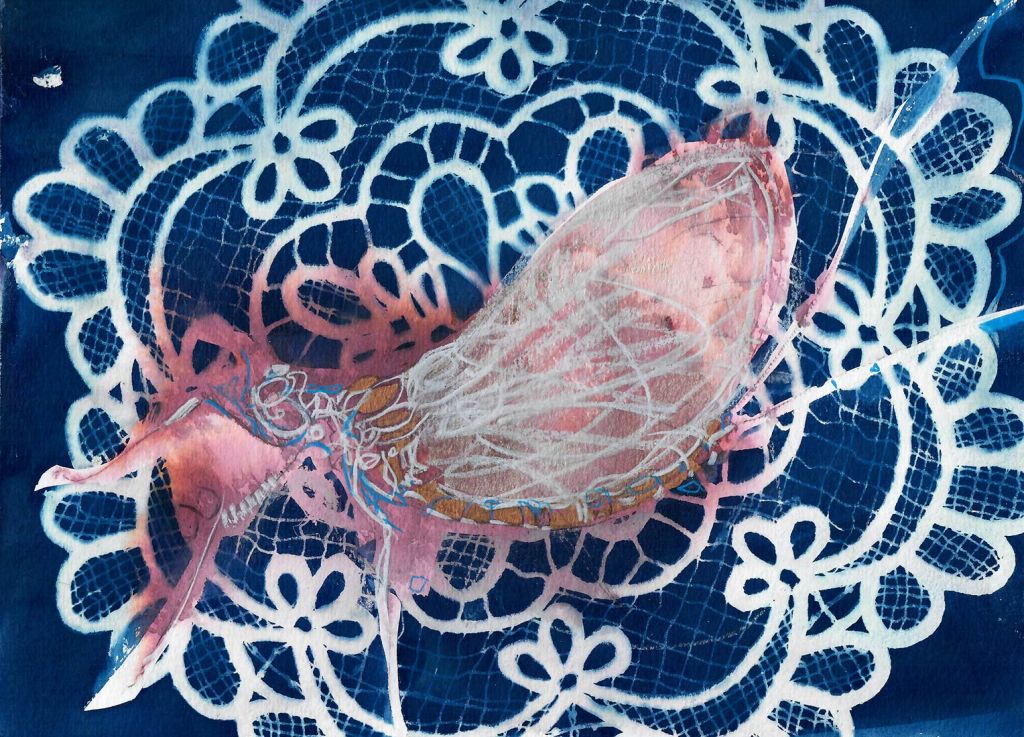
Cyanotype of hand-made doily atop an ink & colored pencil drawing of a drake waterfly from the Arkansas River near Salida
The original drawing of the Drake came from a series created for the Hybrid exchange with Irish artists while on a Terraphillia residency with the ecologist Susan Tweit. A selection of water bugs were drawn in a way that appeared they were exploding with a rusty red color. This was a reference of how the old mineshafts in Leadville, at the headwaters of the Arkansas would fill up and overflow with toxins, flushing out all insect life in the spring runoff. As the foundation of river ecosystems, this was disastrous to fish and other wildlife. Leadville ultimately became a superfund site, so the river is now being revived.
The projected doily reminded me of Victorian era designs; the era many hard-rock miners were driven west from Ireland because of the famine.
 Lee Lee