Mill Village near Anderson, South Carolina
While I was born and raised in Colorado, my heritage is half hill-billy from southern Appalachia. Some of my ancestors arrived in the area as migrant laborers from Wales and Scotland. I also have a vein of Cherokee, though I claim no tribal affiliation since that line of grandmothers chose not to follow their kin on the trail of tears, but hid out in some hollow until they enmeshed themselves in the community arriving from the northern emerald isles. My grandfathers played bluegrass, integrating their own music traditions with new veins emerging in their new home. They made moonshine and some consumed all too much of it. Their dwellings were in the hills until my grandmother decided to move into town, where much of this side of the family still live, Anderson. My great-great grandfather was illiterate but had a sharp mind for math. He started working in the cotton mills, and boarded teachers who taught him how to read and write in exchange for room and board. Ultimately he became the assistant superintendent of his mill near Anderson. Everyone had children young, so I knew my great-grandmother who was one of nine children and a spinner in that mill. My grandfather was a weaver. They were called ‘lintheads’ for the cotton fluff that would alight in their hair and clothes after a day’s work.
By the time she took me to see her old mill, it was abandoned. It had likely been set ablaze to collect insurance money as production steadily left our shores to other places that offered cheaper labor and lower environmental standards. Before she left the world, my grandmother Bonnie wrote family histories in a series of letters that I transcribed into these drawings. I had photographed the collapsed structures and transferred xerox copies of the photos to Strathmore paper, then worked into them with pencil and charcoal. I then burnt the drawings and mounted them to tar paper I had collected on the site. Her words offer vignettes of life in a mill village and offer a reflection of the transition from livelihoods to the loss of jobs as production was outsourced. The end of an era.
Quotes from letters written by my grandmother, Bonnie Jean Cromer
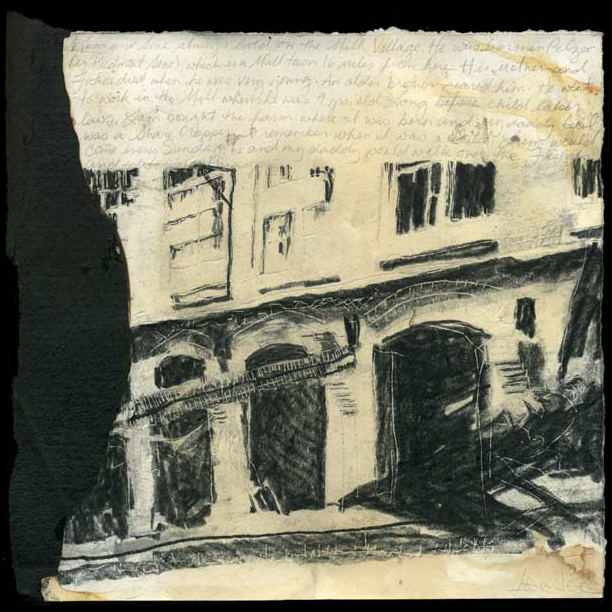
“Lum and Sene,always lived on the Mill Village.He was born in Pelzer (in Piedmont Sene),which is a Mill Town 16 miles from here.His Mother and Father died when he was very young.An older Brother reared him.He went to work in the Mill when he was 9 yrs.old.Long before child labor laws.Lum bought the Farm where I was born and my Daddy Cecil was a Share Cropper.I remember when I was a Child, Lum would come every Sunday,he and my Daddy would walk over the Fields and discuss things“
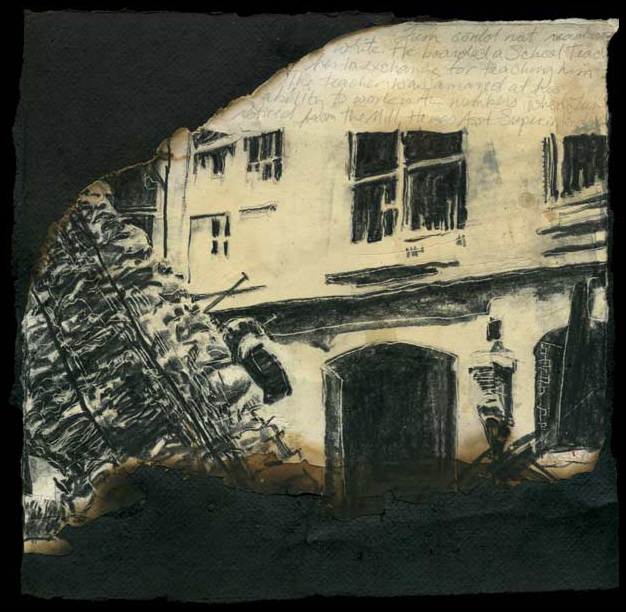
“Lum could not read and write.He boarded a School Teacher in exchange for teaching him.The Teacher was amazed with his ability to work with numbers.When Lum retired from the Mill,He was Asst.Superintendant of the Mill.A very well liked Man.He suffered so much from Asthma and died when he was my age.”
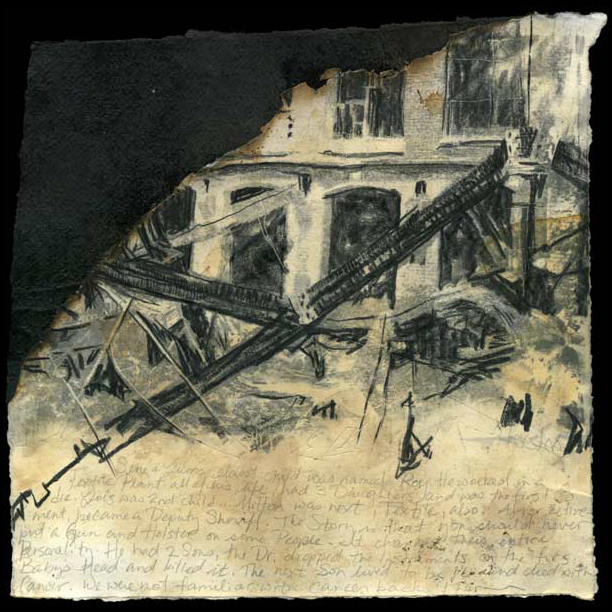
“Sene and Lum’s eldest Child was named Roy.He worked in a Textile Plant all of his life,had 3 Daughters and was the first to die.Lois was the 2nd.child…Milton was next,Textile,also.After retirement,became a Deputy Sheriff.The Story is that you should never put a Gun and Holster on some People.It changes their entire Personality.He had 2 Sons,the Dr.dropped the Instuments on the firs Baby’s Head and killed it.The next Son lived to be 16 and died with Cancer.We were not familiar with Cancer back then.”
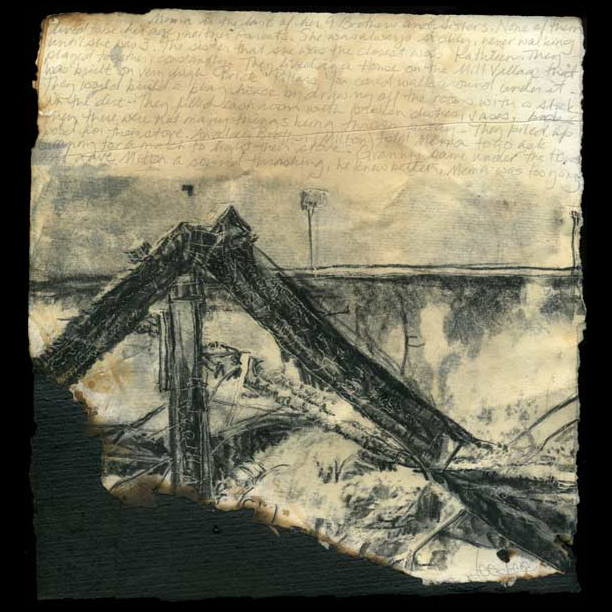
“Mema is the last of her 9 Brothers and Sisters. None of them lived to be her age,neither Perents. She was always sickly,never walking until she was 3.The sister that she was the closest was Kathleen.They played together,constantly …They lived in a House on the Mill Village that was built on very high Brick Pillars You could walk around under it.They would build a play house by drawing off the rooms with a stick in the dirt.They filled each room with broken dishes,vases,back then there were not many things being thrown away.They piled up wood for their stove.An older Brother (Milton)told Mema to go ask Granny for a match to light their stove. Granny came under the HOuse and gave Milton a sound thrashing,he knew better,Mema and Kathleen were too young.”
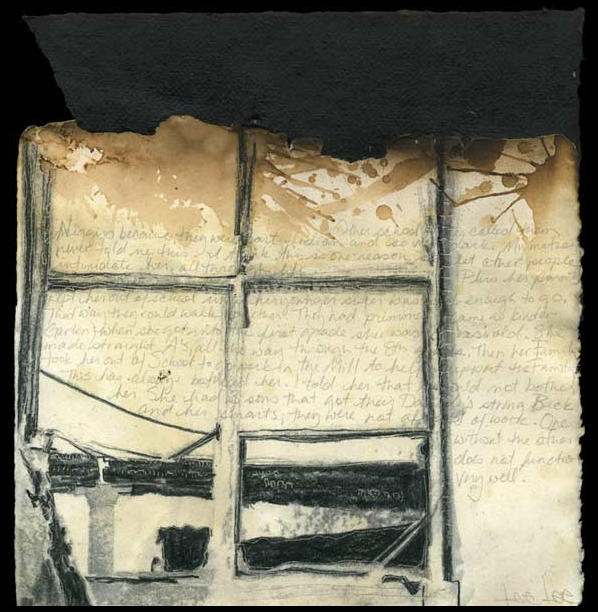
“Other school mates called them Niggers because they were part Indian and so very dark.My Mother never told me this.I think this is one reason,she let other people intimidate her,all through Life.Plus her Perents kept her out of School until her younger Sister was old enough to go.That way they could walk together. The had Primmer(same as Kinder Garten)when she got into the First grade,she was 8 yrs.old. She made straight A’s,all the way through the 8th grade,then her Family took her out of School to go to work in the Mill to help support the Family This has always bothered her.I told her than should not bother her.She had 3 Sons that got her smarts and their Daddy’s stong Back,they were not afraid of work.One with out the other does not function very well.”
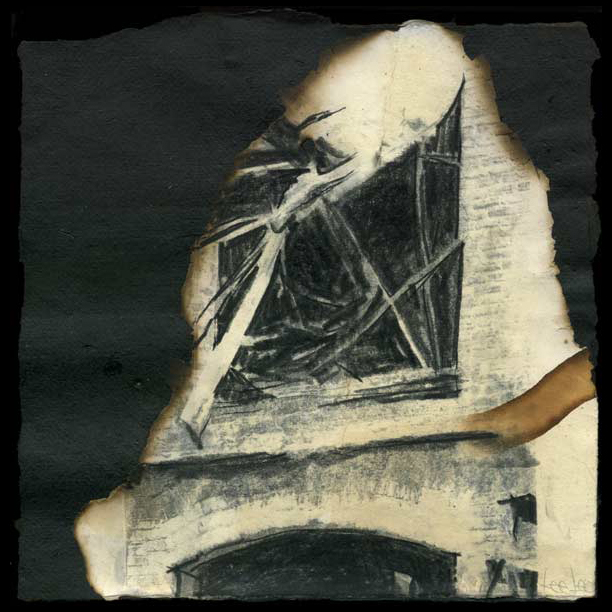
Private collection, Denver
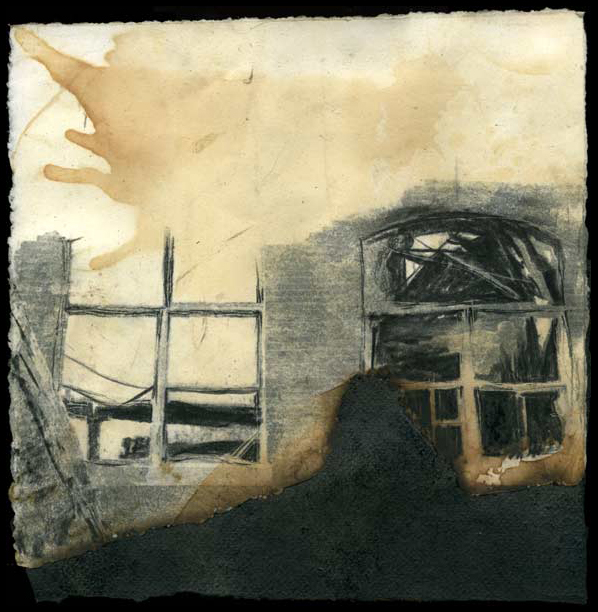

Lee Lee | lintheads | 11″ x 11″ | May 2007
Xerograph, charcoal, pencil and tar paper collaged with burnt Strathmore paper
 Lee Lee